
- What Is the Difference Between a Stye and Chalazion?
- Stye Symptoms: What Should You Look For?
- Chalazion Symptoms: How Is It Different?
- What Causes Eyelid Lumps and Bumps?
- Stye Treatment vs Chalazion Treatment
- 1. Apply a Warm Compress
- 2. Maintain Proper Eyelid Hygiene
- 3. Seek Medical Treatment When Needed
- When Should You See an Eye Specialist?
- Get Expert Eye Care at Anideep Eye Hospital
A small bump on your eyelid may seem harmless, but should you ignore it? While some eyelid lumps are caused by blocked oil glands, others develop due to an infection. Understanding the difference between a stye and chalazion can help you choose the right care and avoid unnecessary discomfort.
Both conditions can cause a swollen eyelid bump, redness, and irritation. However, their causes, symptoms, and treatments are different. Recognising these differences can help you understand when home care may be enough and when you should consult an eye specialist.
What Is the Difference Between a Stye and Chalazion?
A stye and a chalazion are common causes of eyelid lumps and bumps. Although they may look similar, they develop for different reasons.
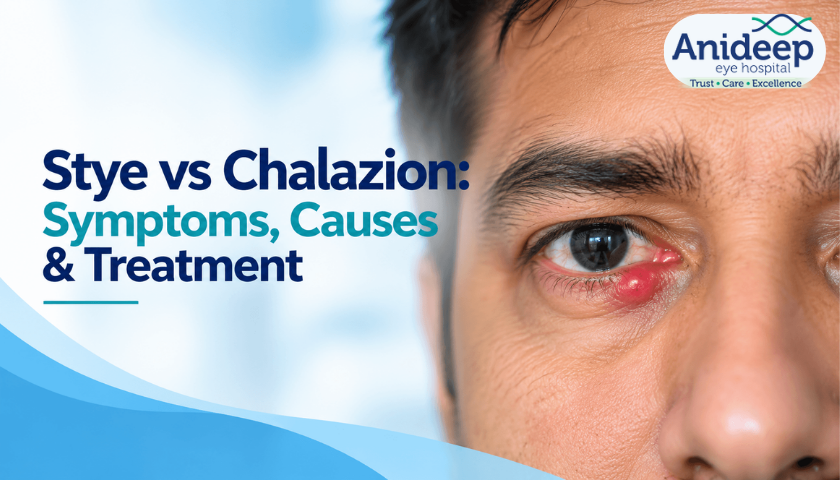
- Stye: A painful, red bump that usually develops due to a bacterial infection in an eyelid gland or eyelash follicle.
- Chalazion: A firm lump that forms when an oil-producing meibomian gland becomes blocked. It is usually not caused by an active infection.
A stye often develops quickly and feels tender, while a chalazion typically grows more slowly and may cause little or no pain.
Stye Symptoms: What Should You Look For?
A stye usually appears near the edge of the eyelid and may resemble a small pimple. It can develop on the upper or lower eyelid.
Common stye symptoms include:
- A painful, red eyelid bump.
- Swelling and tenderness around the affected area.
- A small yellow or white spot containing pus.
- Watery eyes or a gritty sensation.
- Mild crusting around the eyelashes.
Most styes improve within several days to about one or two weeks. Avoid squeezing the bump, as this can worsen irritation or spread the infection.
Chalazion Symptoms: How Is It Different?
A chalazion develops when oil becomes trapped inside a blocked eyelid gland. Unlike a stye, it is usually less painful and may gradually become noticeable over several days or weeks.
Common chalazion symptoms include:
- A firm lump in the upper or lower eyelid.
- Mild swelling or localised redness.
- Little or no pain once the initial inflammation settles.
- Blurred vision if a large lump presses against the eye.
- Persistent eyelid swelling that does not quickly disappear.
A chalazion may resolve on its own, but some lumps can persist for weeks or longer and require medical evaluation.
What Causes Eyelid Lumps and Bumps?
The most common causes of eyelid lumps include blocked oil glands, bacterial infections, and inflammation along the eyelid margins.
Several factors can increase the risk of developing a stye or chalazion:
- Poor eyelid hygiene: Can contribute to irritation and bacterial buildup.
- Blepharitis: Inflammation around the eyelid margins can increase the risk of recurring lumps.
- Blocked oil glands: Trapped oil can lead to chalazion formation.
- Previous eyelid lumps: People who have had a stye or chalazion may experience them again.
- Certain skin conditions: Rosacea and seborrhoeic dermatitis may increase the risk.
Stye Treatment vs Chalazion Treatment
The right treatment depends on the type of lump, its severity, and how long it has been present.
1. Apply a Warm Compress
Place a clean, comfortably warm washcloth over your closed eyelid for 10–15 minutes, three to five times daily. This can encourage drainage from a stye and help unblock an oil gland affected by a chalazion.
2. Maintain Proper Eyelid Hygiene
Keep your eyelids clean and avoid rubbing your eyes. Do not share towels, and temporarily avoid eye makeup and contact lenses until the condition resolves.
3. Seek Medical Treatment When Needed
If a stye is infected, an eye specialist may prescribe medication when appropriate. Persistent chalazia may require a minor procedure to drain the lump or another treatment recommended by an ophthalmologist. Never squeeze, puncture, or attempt to drain an eyelid bump yourself.
When Should You See an Eye Specialist?
Most uncomplicated styes and chalazia improve with appropriate care. However, consult an eye specialist if the lump persists, repeatedly returns, grows larger, or interferes with your vision.
Seek urgent medical attention if you experience severe eye pain, rapidly spreading redness or swelling, fever, pain when moving your eye, or vision changes.
A recurring or unusual eyelid lump should be examined to rule out other conditions that can resemble a stye or chalazion.
Get Expert Eye Care at Anideep Eye Hospital
If you have persistent eyelid lumps or are unsure whether you have a stye or chalazion, professional evaluation can help you receive the right treatment.
Anideep Eye Hospital in Mumbai provides comprehensive eye care and access to experienced ophthalmologists. If you are looking for an eye hospital in Mumbai or an eye specialist in Mumbai, consult the team for an appropriate assessment of your eye concerns.
Visit Anideep Eye Hospital or book an appointment for personalised eye care.
Medical note: This article is for educational purposes and does not replace a professional eye examination.