
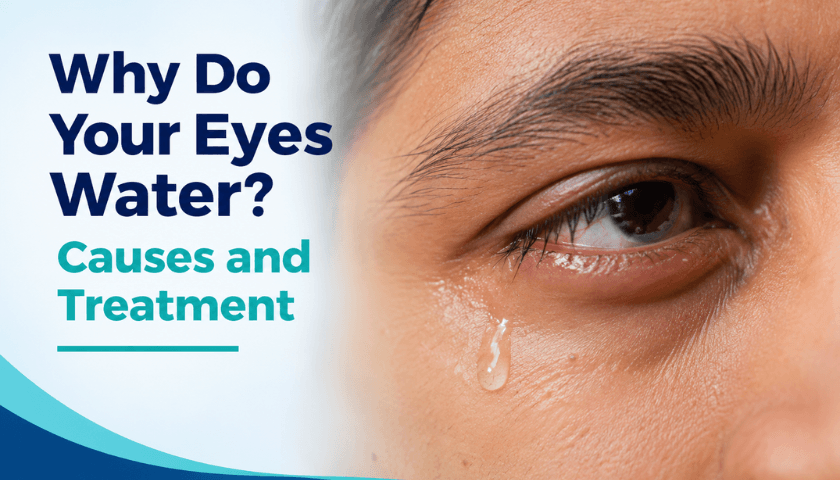
- Why Are My Eyes Watering Without Any Reason?
- 7 Common Causes of Watery Eyes You Should Know
- Symptoms That May Accompany Excessive Eye Watering
- How Are Watery Eyes Diagnosed?
- What Is the Right Watery Eyes Treatment?
- When Should You See an Eye Specialist?
- Get Expert Eye Care at Anideep Eye Hospital, Mumbai
Have you ever noticed tears rolling down your cheeks while you are simply working, reading, or looking at your phone? You are not upset, yet your eyes keep watering. While occasional tearing is normal, frequent or excessive watering can indicate an underlying eye problem that deserves attention.
Watery eyes, medically known as epiphora, occur when your eyes produce too many tears or when tears cannot drain properly. Surprisingly, even dry eyes can trigger excessive tearing. Understanding the actual cause is the first step towards finding the right treatment and keeping your eyes comfortable.
Why Are My Eyes Watering Without Any Reason?
Your eyes constantly produce tears to keep their surface moist, protect against dust and wash away irritants. Normally, excess tears drain through tiny openings in the eyelids into the nose.
When this balance is disturbed, tears may overflow onto your cheeks. There are two main reasons: excessive tear production or poor tear drainage.
Let's look at the most common causes of watery eyes.
7 Common Causes of Watery Eyes You Should Know
1. Dry Eye Syndrome
It may sound surprising, but dry eyes are among the common causes of excessive tearing. When the tear film becomes unstable or evaporates too quickly, the eye surface becomes irritated. In response, the tear glands produce additional reflex tears, leading to watering.
2. Eye Allergies
Exposure to dust, pollen, pet dander, and other allergens can trigger an allergic reaction. This often causes itching, redness, swelling, and excessive eye watering. Rubbing your eyes can make the irritation worse.
3. Blocked Tear Ducts
Tears normally drain through small channels near the inner corners of your eyelids. If these channels become narrowed or blocked, tears cannot drain properly and begin overflowing. This may cause constant watery eyes, particularly in one eye.
4. Eye Infections
Conditions such as conjunctivitis can cause inflammation, redness, discharge and excessive tearing. Depending on the cause, symptoms may affect one or both eyes.
5. Eyelid Problems
Conditions such as entropion (inward-turning eyelids), ectropion (outward-turning eyelids) and misdirected eyelashes can irritate the eye surface. This irritation may trigger continuous tearing.
6. Environmental Irritants
Smoke, pollution, strong winds, air conditioning and dust can irritate the eyes. In response, the tear glands produce additional tears to protect the surface.
7. Digital Eye Strain
Spending long hours on mobile phones, laptops and computers can reduce how frequently you blink. This may destabilise the tear film, increase dryness and contribute to eye irritation and watering.
Symptoms That May Accompany Excessive Eye Watering
Watery eyes may occur on their own or alongside other symptoms, depending on the underlying condition.
Watch for signs such as:
- Persistent tearing or tears rolling down your cheeks.
- Redness, itching, or burning sensations.
- A gritty feeling, as though something is inside your eye.
- Swollen eyelids or sticky discharge.
- Blurred vision or sensitivity to light.
- Recurrent eye irritation that affects daily activities.
If watering continues or affects your routine, a comprehensive eye examination can help identify the underlying cause.
How Are Watery Eyes Diagnosed?
An eye specialist examines the eye surface, eyelids, and tear drainage system to determine why excessive tearing is occurring.
Depending on your symptoms, the examination may include:
- Slit-Lamp Examination: Checks the cornea, conjunctiva, and eyelids for inflammation, irritation, or other abnormalities.
- Tear Film Assessment: Evaluates tear quality and stability to identify dry eye conditions.
- Tear Drainage Evaluation: Checks whether tears are flowing properly through the drainage channels.
- Fluorescein Dye Test: Helps assess the tear drainage pathway and identify possible blockages.
These evaluations help the specialist recommend an appropriate treatment plan.
What Is the Right Watery Eyes Treatment?
The right watery eyes treatment depends on the underlying cause. Simply using eye drops may not solve the problem if the actual issue involves blocked tear ducts or eyelid abnormalities.
Common treatment approaches include:
- Lubricating Eye Drops: Help manage dryness and improve tear film stability.
- Anti-Allergy Medication: Prescribed when allergies trigger excessive tearing and itching.
- Infection Treatment: Appropriate medication may be recommended for bacterial or other eye infections.
- Eyelid Care: Warm compresses and eyelid hygiene may help manage certain eyelid conditions.
- Tear Duct Procedures: Blocked tear ducts may require probing, balloon dilation, stenting, or surgery, depending on the location and severity of the blockage.
Avoid using medicated eye drops without consulting an eye specialist.
When Should You See an Eye Specialist?
Occasional watering caused by wind or dust usually settles once the irritation disappears. However, persistent or unexplained tearing should not be ignored.
Seek prompt medical attention if watery eyes are accompanied by severe pain, sudden vision changes, significant redness, light sensitivity or injury. These symptoms may indicate a condition requiring urgent evaluation.
Get Expert Eye Care at Anideep Eye Hospital, Mumbai
Persistent watery eyes can affect your comfort, reading, working, and everyday activities. Identifying the underlying cause is essential for choosing the right treatment.
At Anideep Eye Hospital, patients have access to comprehensive eye examinations and specialised ophthalmic care. If you are searching for an experienced eye specialist in Mumbai or a trusted eye hospital in Mumbai, our team is committed to providing personalised attention and appropriate eye care.
Do not let constant watery eyes affect your daily life. Schedule an eye examination at Anideep Eye Hospital and take the right step towards healthier, more comfortable vision.