
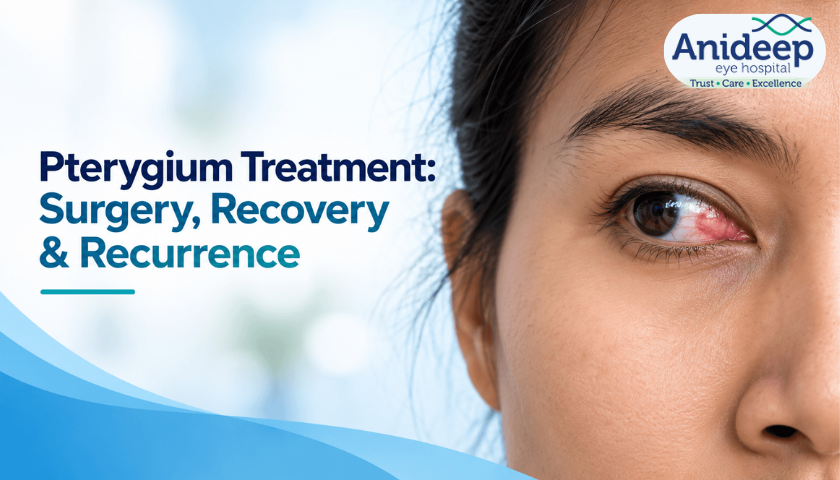
Have you noticed a pinkish, fleshy growth creeping from the corner of your eye towards the coloured part? It may look harmless at first, but if it starts causing irritation or affecting your vision, it deserves attention.
Known as pterygium or surfer’s eye, this condition is often associated with prolonged exposure to sunlight, wind, and dust. The good news is that effective pterygium treatment can help relieve symptoms and protect your vision. But when is removal necessary, and can the growth return after surgery?
Let’s explore what you need to know.
What Is Pterygium?
Pterygium is a non-cancerous growth of tissue that develops on the conjunctiva, the thin membrane covering the white part of the eye. It can gradually extend towards the cornea, the transparent front surface of the eye.
Although it commonly develops on the side of the eye closest to the nose, it can occasionally appear on the other side. It may affect one or both eyes.
What Are the Common Pterygium Symptoms?
Early pterygium may cause no noticeable discomfort. As it grows, however, symptoms can become more apparent.
Common pterygium symptoms include:
- Redness and persistent eye irritation.
- A gritty sensation, as if something is stuck in the eye.
- Dryness, burning, or itching.
- Excessive watering.
- Blurred vision if the growth affects the cornea.
- Changes in the shape of the cornea, which may cause astigmatism.
If you notice a growing tissue-like patch on your eye or experience persistent irritation, consult an eye specialist for an examination.
What Are the Main Pterygium Causes?
The exact cause is not fully understood, but long-term exposure to ultraviolet (UV) radiation is a major risk factor. Other contributing factors include:
- Sunlight exposure: Spending long hours outdoors without UV-protective eyewear.
- Wind and dust: Frequent exposure to dry, dusty, or windy environments.
- Outdoor activities: Working outdoors or participating in activities such as surfing without adequate eye protection.
- Chronic irritation: Environmental conditions that repeatedly irritate the eye.
Wearing sunglasses that block 100% of UVA and UVB rays, along with a wide-brimmed hat, can help reduce exposure.
When Is Pterygium Treatment Necessary?
Not every pterygium requires surgery. If the growth is small and does not affect vision, an eye specialist may recommend regular monitoring and lubricating eye drops to manage dryness and irritation.
Pterygium removal may be recommended when:
- The growth continues to increase in size.
- Persistent redness or irritation does not improve with medication.
- The growth changes the corneal shape and affects vision.
- It approaches the central visual area.
- It restricts eye movement or causes significant cosmetic concern.
An eye examination helps determine the appropriate treatment based on the growth’s size, progression, and effect on vision.
What Does the Pterygium Removal Procedure Involve?
When eye drops are insufficient, pterygium surgery may be recommended. The procedure is generally performed under local anaesthesia, often as a day-care procedure.
During the operation, the surgeon carefully removes the abnormal tissue. A small graft of healthy conjunctival tissue, usually taken from the same eye, may then cover the affected area. This technique helps reduce the likelihood of recurrence.
Recovery varies, but temporary redness, watering, and mild discomfort are common. Patients should follow their prescribed eye-drop schedule and attend follow-up appointments. Your surgeon will advise when you can resume activities such as swimming and strenuous exercise.
Will Pterygium Come Back After Surgery?
Yes, pterygium can return after removal. However, the risk depends partly on the surgical technique, individual healing, and continued exposure to environmental triggers.
Using a conjunctival autograft can substantially reduce recurrence compared with simply removing the growth and leaving the area uncovered. Recurrence rates vary, but some clinical guidance reports a risk of approximately 5–10% with commonly used graft techniques.
To help reduce the risk of recurrence after surgery:
- Wear UV-protective sunglasses outdoors.
- Protect your eyes from dust and wind.
- Use prescribed lubricating or anti-inflammatory drops as directed.
- Attend follow-up visits to monitor healing and detect regrowth early.
If you notice new tissue developing after surgery, consult your ophthalmologist rather than waiting for it to grow.
Pterygium Eye Growth Treatment at Anideep Eye Hospital
If you are experiencing persistent redness, irritation, or a visible growth on your eye, timely evaluation can help protect your long-term eye health.
At Anideep Eye Hospital, patients can seek an ophthalmic assessment to understand their symptoms and explore suitable treatment options. If you are looking for an eye hospital in Mumbai or an eye specialist in Mumbai, consult a qualified ophthalmologist to determine whether monitoring, medication, or a pterygium removal procedure is appropriate for your condition.
Do not ignore a growing eye lesion. Book an appointment for an early assessment to help you make an informed decision about treatment and protect your vision.
Medical note: This article provides general educational information and should not replace an individual eye examination or medical advice.