
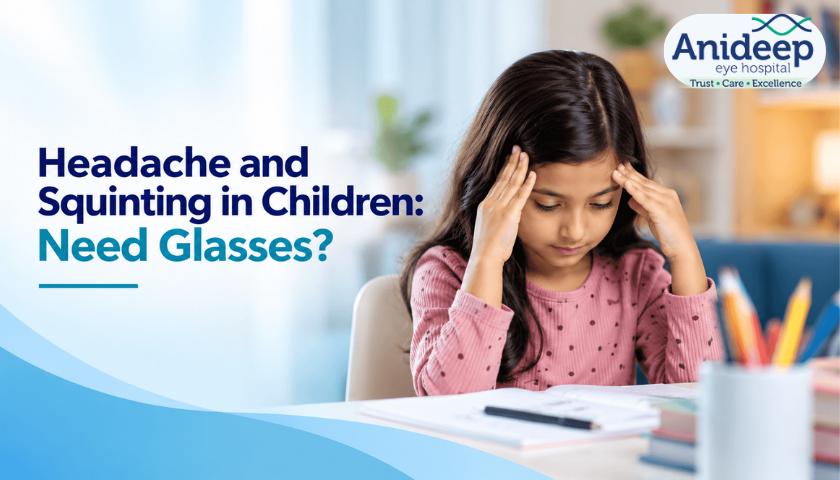
Does your child squint while watching television, complain of headaches after reading, or hold books unusually close to their face? These small habits may be easy to overlook, but they can sometimes signal an underlying vision problem.
Headaches and squinting in children may occur when the eyes struggle to focus clearly. Although not every headache means your child needs glasses, recognising the warning signs early can help prevent discomfort and support healthy visual development.
Why Do Children Squint or Experience Headaches?
Children may not realise that their vision is blurry because they assume everyone sees the world the same way. Instead of explaining the problem, they may squint, rub their eyes, or avoid activities that require clear vision.
Common vision-related causes include:
- Refractive errors: Nearsightedness, farsightedness, and astigmatism can make focusing difficult.
- Eye strain: Extended reading, screen use, or close-up activities may cause discomfort, particularly when an uncorrected vision problem is present.
- Focusing difficulties: Some children struggle to adjust focus between near and distant objects.
- Eye coordination problems: When both eyes do not work together comfortably, reading and other close-up tasks may become tiring.
However, headaches can also result from dehydration, poor sleep, stress, migraines or other health conditions. An eye examination can help determine whether vision contributes to your child's symptoms.
7 Signs Your Child May Need Glasses
Watch for these common signs a child needs glasses, especially when they occur repeatedly.
1. Frequent Squinting
Squinting in children may temporarily make objects appear clearer. Repeated squinting to see the classroom board, television, or distant objects warrants an eye check.
2. Headaches After Reading
Headaches that develop during or after reading, homework, or screen use may indicate eye strain or a focusing difficulty.
3. Holding Books or Screens Too Close
Sitting very close to the television or bringing books near the face may indicate difficulty seeing clearly.
4. Blurred Vision
Your child may struggle to recognise faces from a distance, read the board or describe objects as unclear.
5. Frequent Eye Rubbing
Repeated rubbing may accompany tiredness, irritation, allergies or visual discomfort.
6. Tilting the Head or Closing One Eye
These behaviours can sometimes indicate an eye alignment or focusing problem that needs professional assessment.
7. Avoiding Reading or Close-Up Tasks
Children with visual discomfort may lose concentration, skip lines or become frustrated during homework.
These behaviours do not automatically mean your child needs glasses, but persistent symptoms should not be ignored.
How Are Children's Eye Problems Diagnosed?
If your child experiences repeated headaches or blurred vision in children, schedule a comprehensive eye examination. An eye specialist will assess visual clarity, eye alignment and focusing ability.
The examination may include:
- Testing each eye's vision separately.
- Checking how the eyes move and work together.
- Assessing refractive errors such as nearsightedness or astigmatism.
- Using special eye drops, when needed, to measure the correct glasses prescription.
Early detection matters because some children's eye problems can affect visual development if left untreated.
Do Glasses for Kids Help With Headaches?
Glasses for kids can improve clarity and reduce headaches when an underlying refractive error contributes to the symptoms. However, not every child with headaches needs glasses, and other causes may require separate treatment.
Encourage your child to wear prescribed glasses as advised by the eye specialist. Choose a comfortable, well-fitting frame and arrange follow-up visits as recommended.
To support eye comfort, encourage regular breaks during screen use, good lighting while reading, sufficient sleep, and outdoor play. These habits are helpful, but they do not replace an eye examination when symptoms persist.
When Should You Consult an Eye Specialist?
Consult an eye specialist in Mumbai if your child frequently squints, complains of headaches after reading, struggles to see the classroom board, or avoids close-up activities.
Seek urgent medical care if a headache is sudden or severe, follows a head injury, or occurs with sudden vision changes, repeated vomiting, weakness, or unusual drowsiness.
Give Your Child's Vision the Right Care at Anideep Eye Hospital
Healthy vision plays an important role in your child's learning, confidence, and daily activities. At Anideep Eye Hospital, parents can seek professional guidance for concerns related to children's vision and eye health.
If you notice persistent headaches and squinting in children, arrange an eye examination to identify possible causes and discuss suitable treatment.
Clear vision starts with timely care. Contact Anideep Eye Hospital to discuss your child's eye health needs.