
- What Is a Corneal Ulcer?
- Corneal Ulcer Causes: How Contact Lens Misuse Increases Risk
- Corneal Ulcer Symptoms You Should Never Ignore
- Corneal Ulcer Treatment: Why Early Diagnosis Matters
- Keratoconus and Corneal Ulcers: Understanding the Difference
- How to Prevent Contact Lens-Related Eye Infections
- Protect Your Vision With Anideep Eye Hospital
Red eyes after wearing contact lenses may seem harmless, but sometimes they signal a serious eye problem. A corneal ulcer can develop when the cornea, the clear front surface of the eye, becomes damaged and infected. Without prompt treatment, this condition may lead to corneal scarring, impaired vision, or even permanent vision loss.
Contact lens misuse is an important risk factor for corneal ulcers and other contact lens-related eye infections. Recognising the warning signs early and seeking timely care can help protect your eyesight.
What Is a Corneal Ulcer?
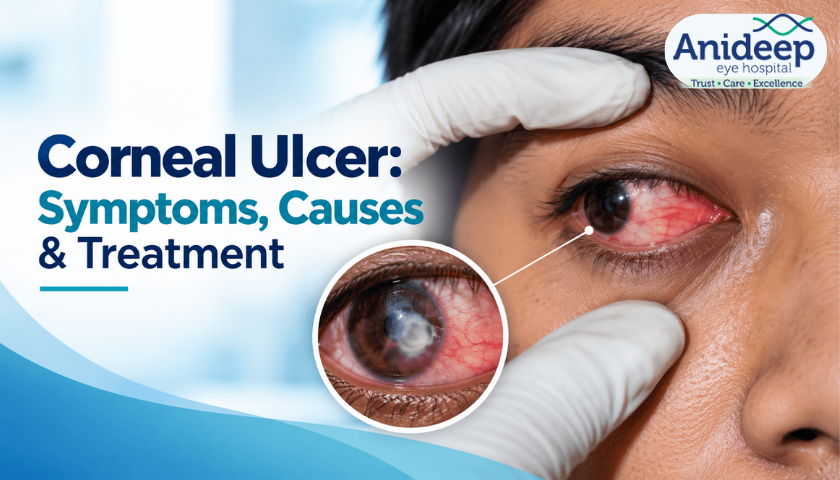
A corneal ulcer is an open sore on the cornea, often caused by an infection. The cornea helps focus light so you can see clearly. When it becomes inflamed or damaged, even everyday activities such as reading or driving may become uncomfortable.
Corneal ulcers can develop due to bacteria, fungi, viruses, or other infectious organisms. They may progress quickly, making early assessment by an eye specialist essential.
Corneal Ulcer Causes: How Contact Lens Misuse Increases Risk
Several factors can damage the cornea and increase the risk of infection. Common corneal ulcer causes include:
- Sleeping in contact lenses: Wearing lenses overnight can increase the risk of corneal infection.
- Poor lens hygiene: Failing to clean and disinfect lenses properly can allow harmful microorganisms to grow.
- Water exposure: Showering or swimming while wearing contact lenses can expose the eyes to infection-causing organisms.
- Wearing damaged or expired lenses: Poorly fitting or damaged lenses may scratch the cornea.
- Using non-prescription lenses: Decorative or coloured lenses without professional fitting can increase the risk of injury and infection.
Contact lens misuse is preventable, making proper hygiene and responsible lens wear essential for maintaining healthy eyes.
Corneal Ulcer Symptoms You Should Never Ignore
Early recognition of corneal ulcer symptoms can help prevent serious complications. Watch for these warning signs:
- Persistent eye redness or irritation
- Moderate to severe eye pain
- Blurred or reduced vision
- Sensitivity to light
- Excessive watering or unusual discharge
- A white or grey spot on the cornea
Red eyes from contact lenses accompanied by pain, light sensitivity, or blurred vision require urgent medical assessment. Remove your lenses and contact an eye specialist immediately rather than waiting for the symptoms to disappear.
Corneal Ulcer Treatment: Why Early Diagnosis Matters
Corneal ulcer treatment depends on the underlying cause, infection severity, and extent of corneal damage. An ophthalmologist may examine the cornea using a specialised microscope and, when necessary, collect a sample to identify the organism causing the infection.
Treatment may involve prescription antibiotic, antifungal, or antiviral medication, depending on the diagnosis. Severe cases may require additional procedures or, occasionally, corneal transplantation.
Never self-medicate with eye drops or restart contact lens use without medical advice. Delayed or inappropriate treatment can increase the risk of scarring and permanent vision loss.
Keratoconus and Corneal Ulcers: Understanding the Difference
Keratoconus and corneal ulcers affect the same part of the eye but are different conditions. Keratoconus causes the cornea to thin and bulge outward into a cone-like shape, resulting in distorted vision. A corneal ulcer is an open sore that commonly develops due to infection or injury.
People with keratoconus may need specially fitted contact lenses for vision correction. However, improper lens fitting or poor hygiene can increase the risk of corneal injury and infection. Regular eye examinations and professional contact lens fitting are important for protecting corneal health.
How to Prevent Contact Lens-Related Eye Infections
Simple daily habits can significantly reduce the risk of infection:
- Wash and dry your hands before handling lenses.
- Clean and store lenses using the recommended contact lens solution.
- Never rinse or store lenses in tap water.
- Avoid sleeping, swimming, or showering in contact lenses.
- Replace lenses and lens cases according to professional guidance.
- Stop wearing lenses immediately if your eyes become painful or unusually red.
Protect Your Vision With Anideep Eye Hospital
If you experience persistent redness, eye pain, or sudden vision changes, timely professional care is essential. Anideep Eye Hospital in Vile Parle, Mumbai, provides comprehensive eye care and specialist consultations to help patients manage various eye conditions.
If you are looking for an eye hospital in Mumbai or an experienced eye specialist in Mumbai, consult an ophthalmologist for appropriate evaluation and treatment.
Visit Anideep Eye Hospital or call +91 91676 61177 to enquire about an appointment.
Medical note: This article is for educational purposes and does not replace professional medical advice. Suspected corneal ulcers require urgent assessment.